
Agfa PD16 Clipper
One of the non-Kodak cameras in my collection, this simple metal camera from the 1930s is still quite capable, and it hides a feature to save photographers money.

Although my collection is primarily centered around Kodak cameras and peripherals, there are a few other manufacturers that are represented in my collection. One of them is Agfa Ansco, of which I have this Agfa PD16 Clipper. The story of Ansco’s patent infringement lawsuit against Kodak related to the use of flexible plastic as a film base will be saved for another time. By the time the suit was settled in 1914 for $5 million (equivalent to about $160 million today), Ansco had been surpassed in sales by Kodak but continued building new cameras into the 1990s. The factory in Binghamton, New York, where this and many other cameras were built, was demolished in 2000.
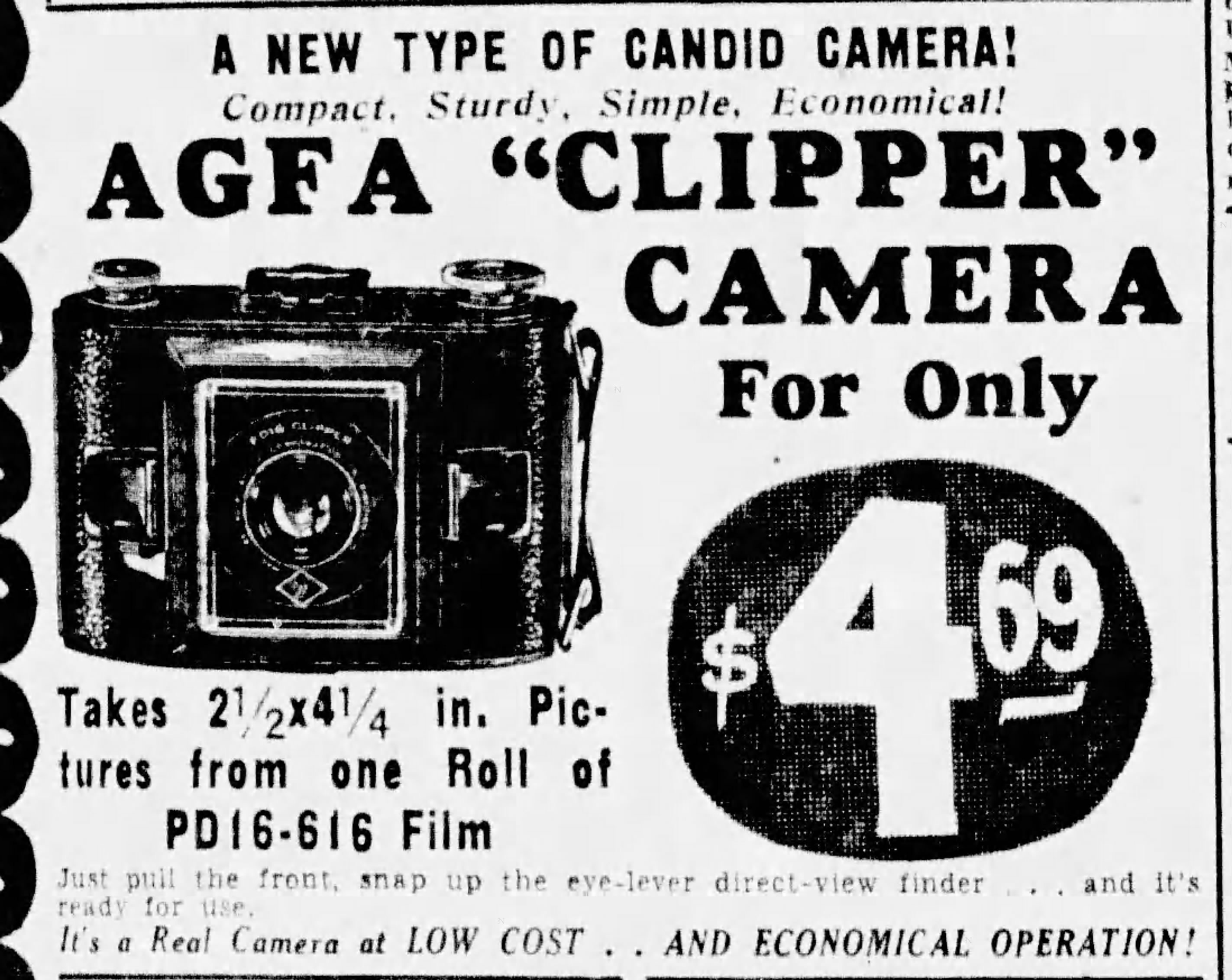
This model was made in the late 1920s through the 1930s with cosmetic variations. It usually sold for $5 from the mid-1930s into the 1940s (equivalent to about $115-$120 today) without any accessories.
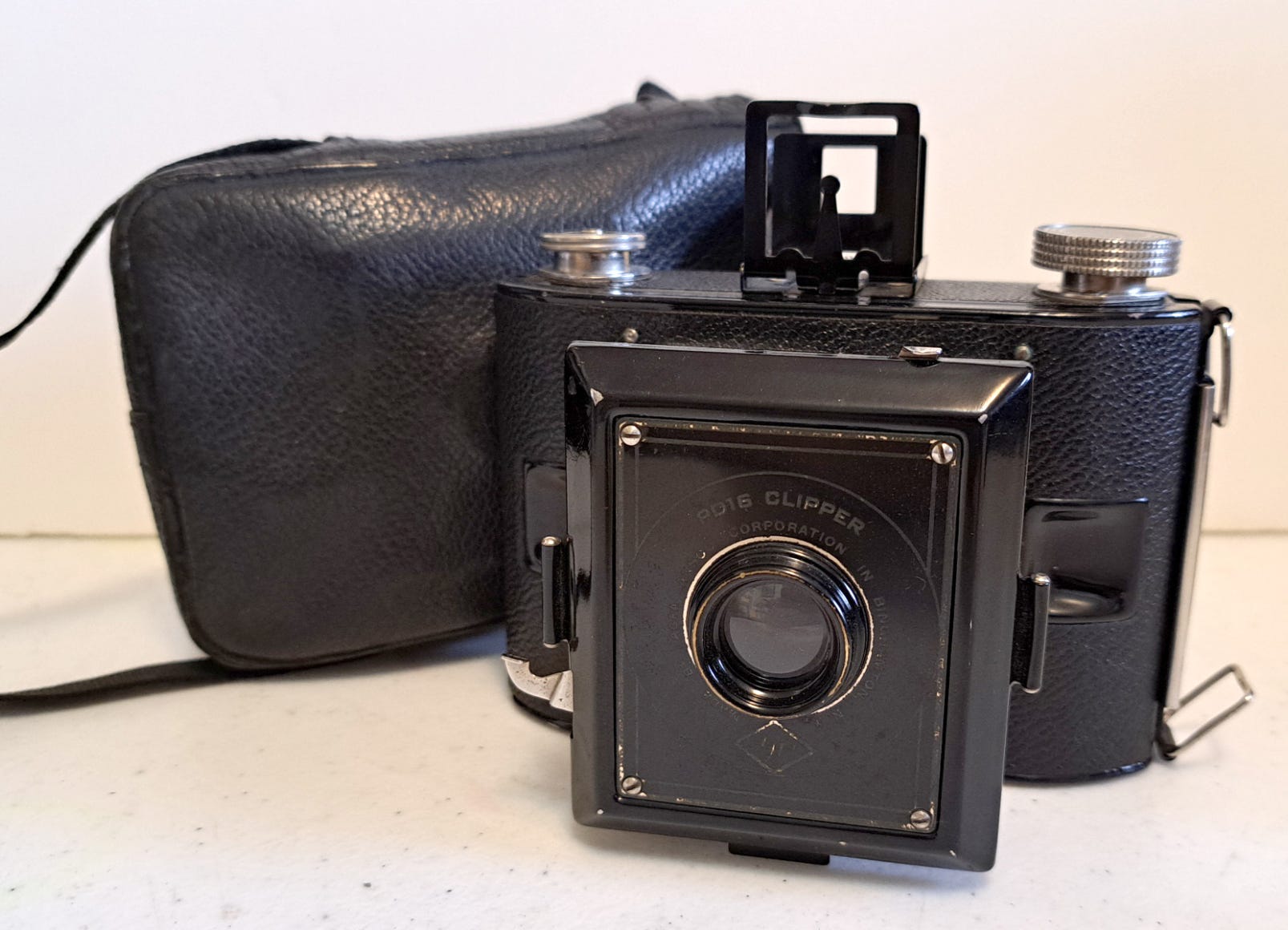
Its simplicity and lack of user controls is very similar to the Kodak Brownie line of cameras, with only instant and bulb mode shutter speeds, a fixed aperture, and fixed focus. The minimum focusing distance for this lens was about 6 feet, and it promised good focus from there to infinity. I have not been able to find a source that definitively states the aperture except that it may be somewhere between f/11 and f/14. The controls themselves are very similar to many of the Brownies, so most photographers would be able to make photographs with this camera easily. It has an all-metal body for durability and telescoping lens board so it can be easily packed away.


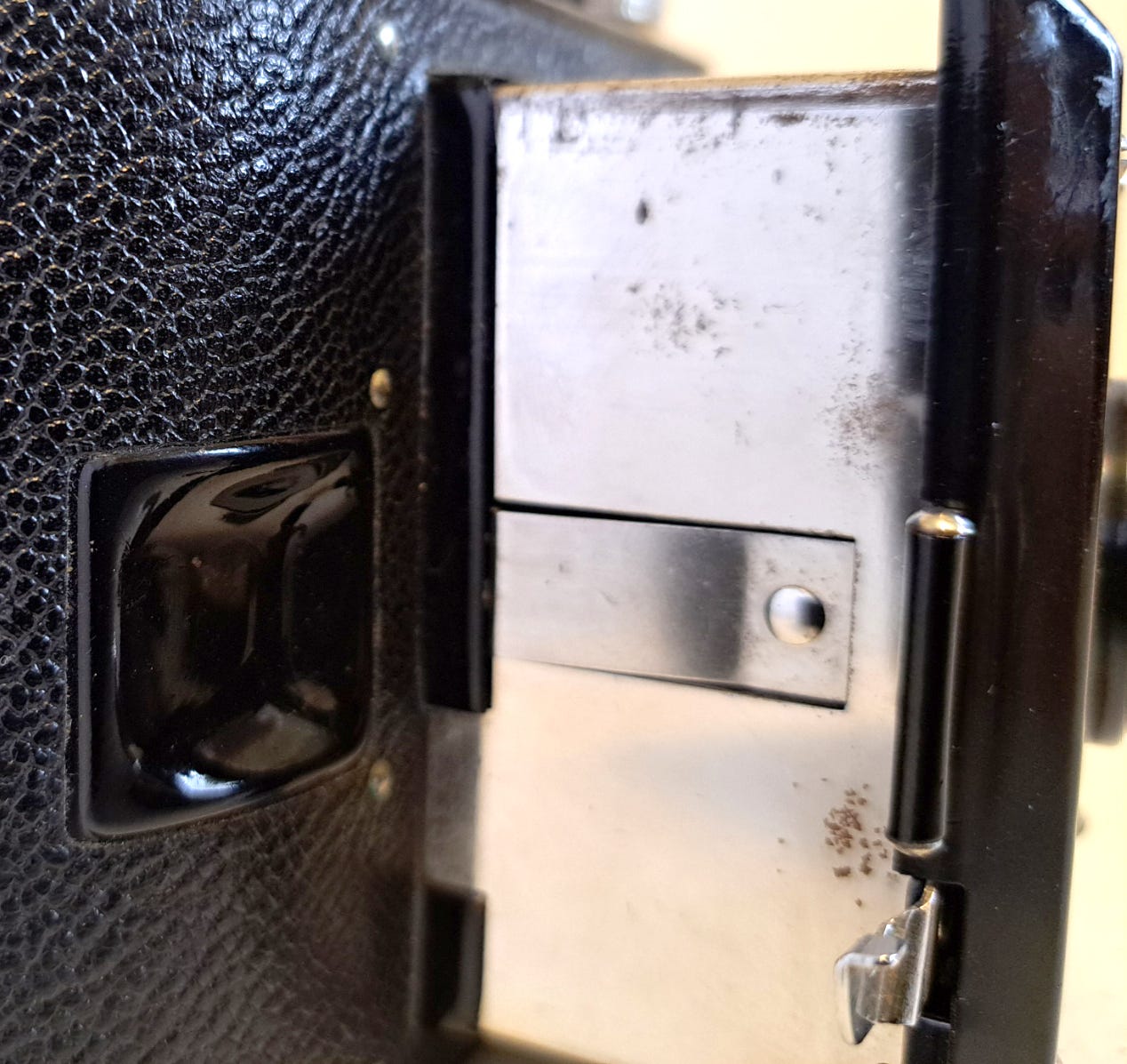
To prepare the camera for use, hold the camera firmly with one hand and grip the two bars on either side of the lens board with the other, then pull the lens board out from the camera. Two flat springs on the side of the metal telescope will snap into place when it is pulled all the way out and ready to shoot. To collapse the camera again for storage, use two fingers to press on these flat springs and push the lens board back into the camera body. It will snap in place to hold it there.
The user manual states that “The Agfa Ansco Clipper Camera has been so scientifically designed that exceptionally fine results are easily obtained without special photographic knowledge.” Its limited controls left almost nothing to adjust. The only thing that could be changed, besides the film stock being used, is the shutter speed between instant (about 1/60 second) and bulb mode.


The fully mechanical and self-cocking shutter is controlled by the shutter release lever on the side of the lens board. Since there is not a mechanical interlock between the shutter and the film advance, making a multiple exposure image is as simple as pressing the shutter lever again. The switch for the shutter speed is controlled with a metal slider on the top of the lens board. When the slider is pulled up, the shutter will remain open as long as the shutter lever is pressed.
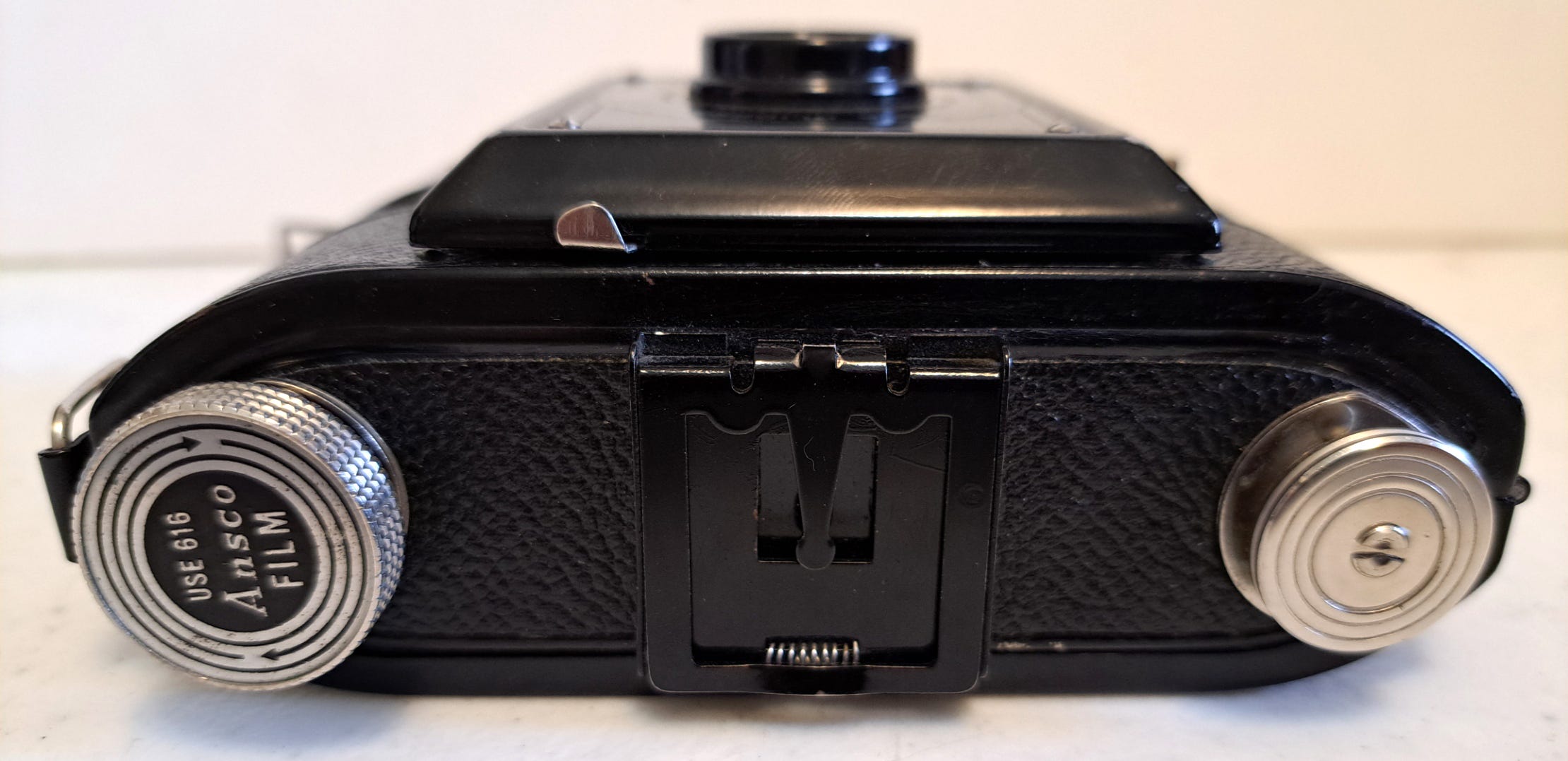
On the top of the camera there are only two knobs, one to hold the film supply and the other to wind the film, and a folding viewfinder. The film advance knob reminds the owner to use size 616 Ansco film. The sticker on the inside of the camera back says to use Agfa PD16 size film, which was the same size. For the amateur photographer, the only important part of that reminder is the 616 size specification; Ansco and Kodak (and other brands) 616 film was all the same size and could be used in this camera. This size film was discontinued in 1984.
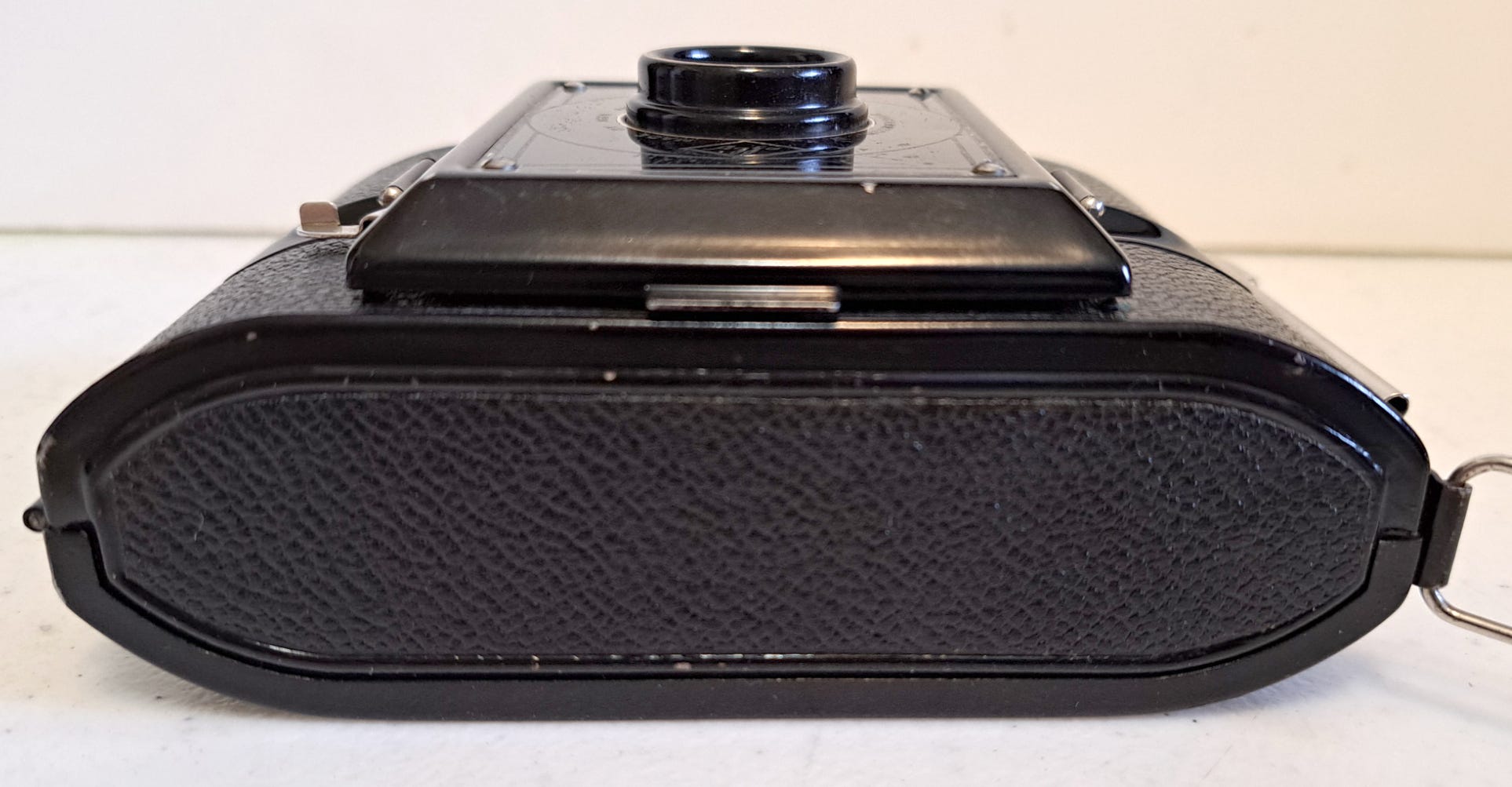
On the bottom of the lens board, a small tab extends so that the camera can be placed on a flat surface. This tab keeps the camera level. There is no tripod socket, but the camera bottom and lens board tab keep it stable for long exposure photographs.
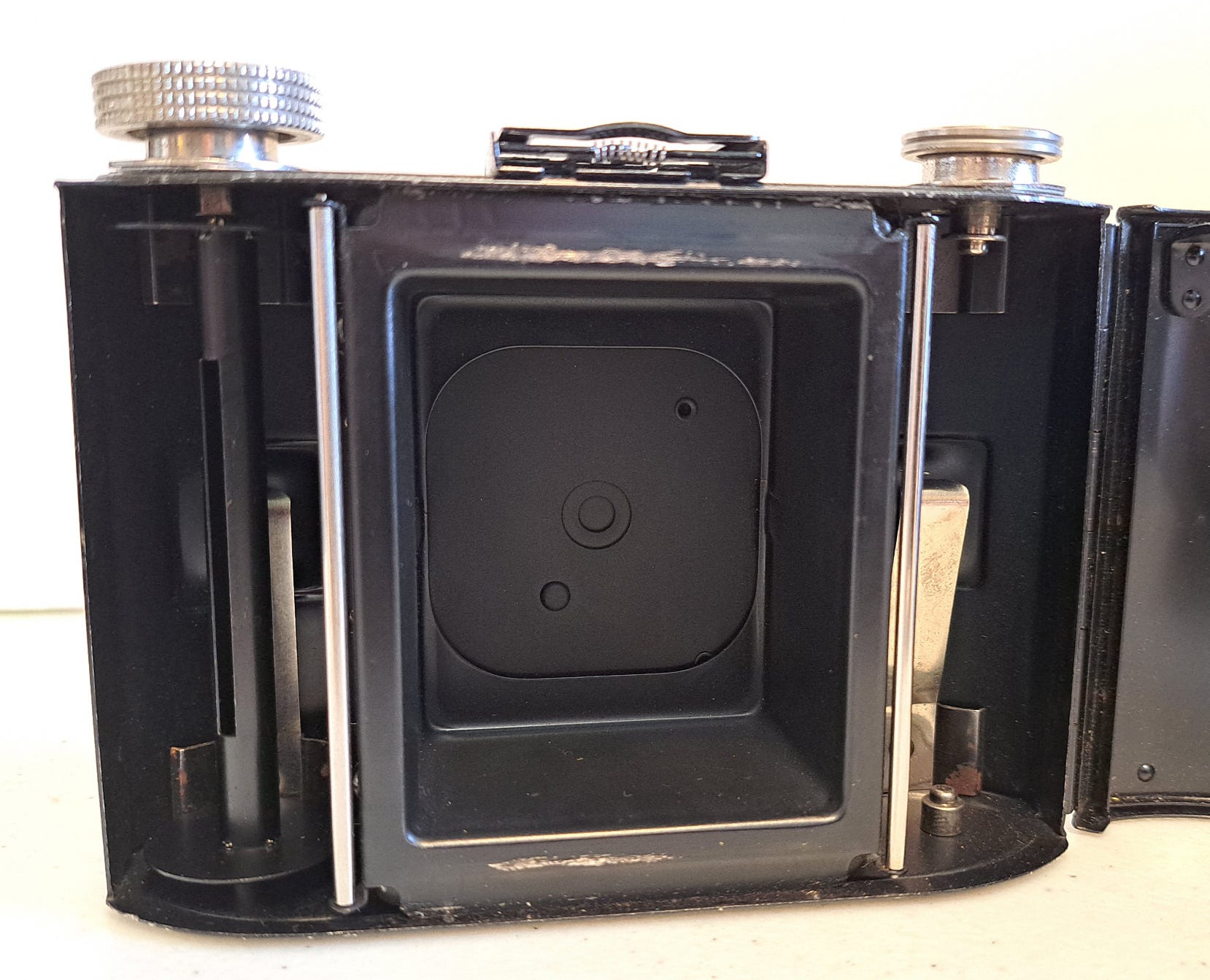
The exposure area of the camera makes an image that is 2½ x 2 1/16 inches in vertical format, allowing for 15 photos per roll. 616 film was typically used in much larger cameras, producing negatives at 2½ x 4¼ inches, as is mentioned in the advertisement shown above. The user manual confirms the negative size for this camera.

Most cameras that use roll film with paper backing will have a red plastic window on the back. The exposure number is printed on the backing paper and the window allows the photographer to see the exposure number. On the back of this camera, there are two exposure counter windows. The two windows help to align the film for each of the 15 exposures.
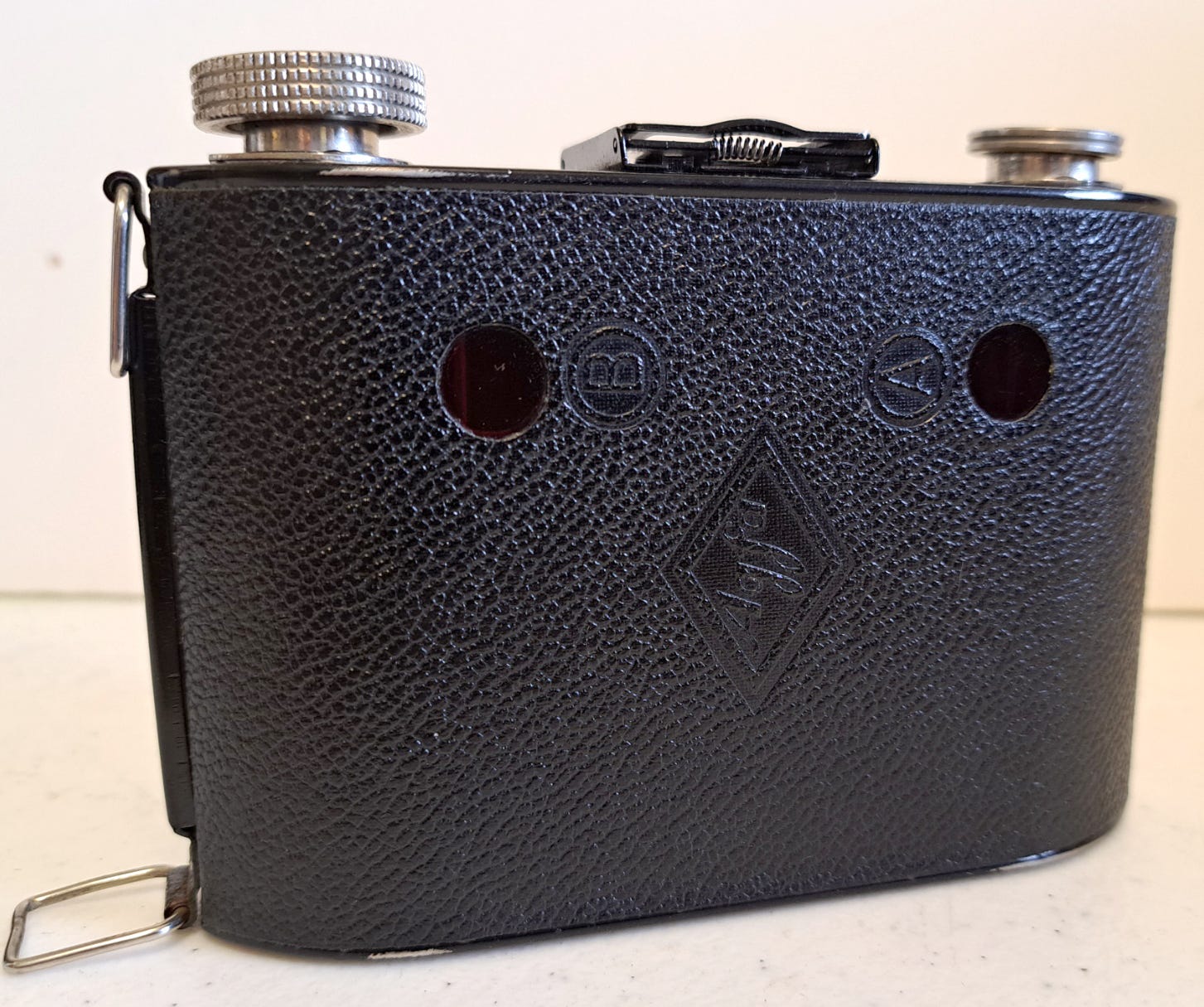
When the film is loaded, it is wound until the first exposure, number 1, appears in window A. After that photograph is taken the film is wound further until the same count, number 1, appears in window B. At that point, it is ready for the second exposure. For the third exposure, the film is wound until the number 2 appears in window A. The film is wound through in this process, allowing for double the number of photographs on what would normally be an 8-photograph roll. Another way to think of this is that this camera is effectively a half-frame 616 camera.
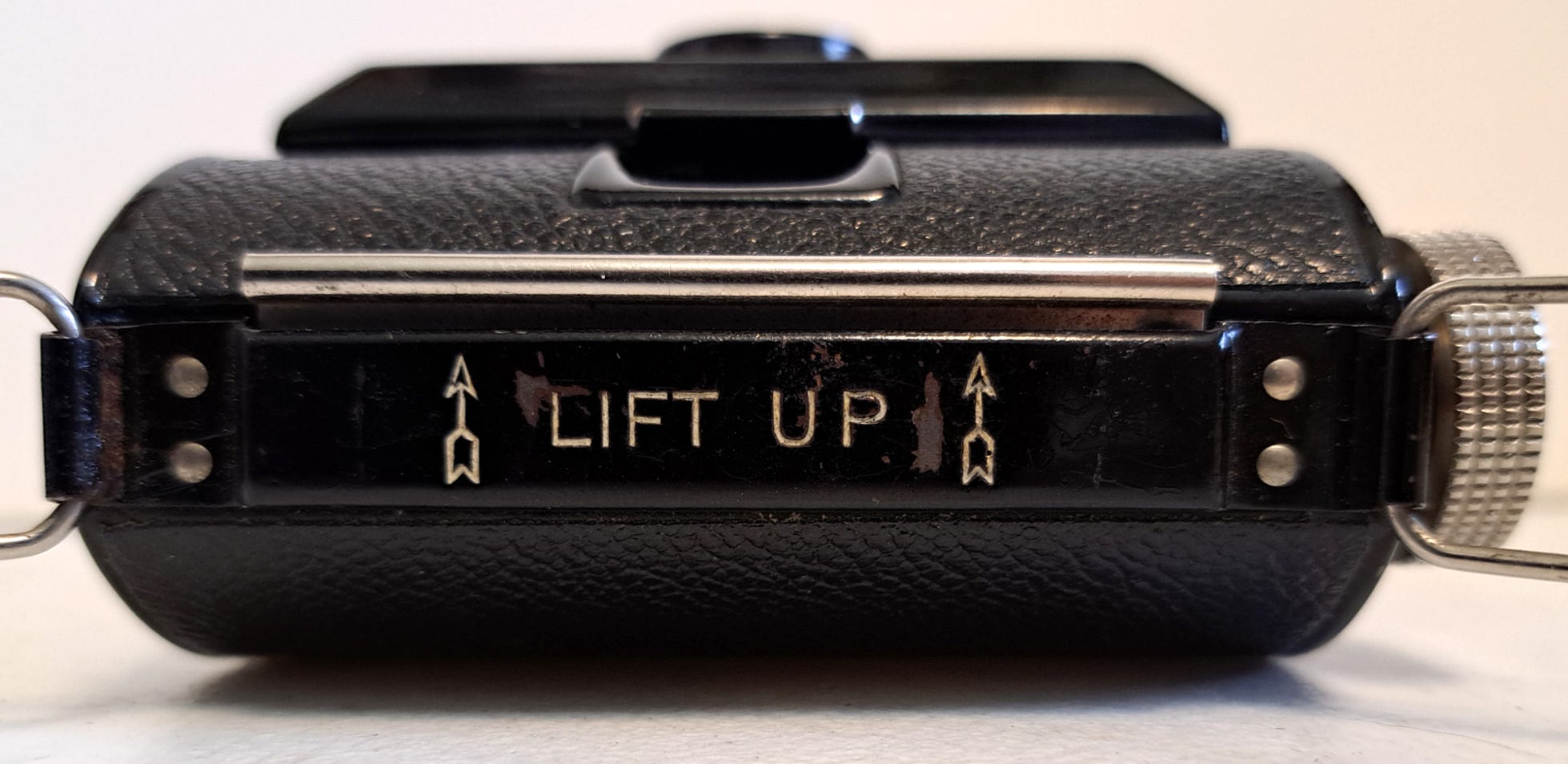


To load the film, first gently lift the plate on the take-up spool side to unlatch the back and swing the back open. Then lift the spool holder on the supply side of the camera. Place the new roll into the supply chamber, pull the backing paper across the film gate to the take-up spool and feed it into the slot there. Wind the film advance knob a couple times to ensure that it is seated properly, then close the back and advance it to photograph number 1, as noted above.
Although this camera was built for simplicity, a newer model was introduced called the Clipper Special. It was sometimes called the Clipper Special 6.3, referring to the f/6.3 aperture that the lens would allow. The Special added controls to allow setting additional shutter speeds, apertures, and focusing points.
I have not used my Clipper yet, because I haven’t yet purchased any adapters for 120 film rolls. There are sets available at Film Photography Project, and they also have bulk rolls of 65mm film for manually rolling 616 size spools. When I do finally use this camera to make photos, I’ll have an update then. If you want to try it, this camera model typically sells for around $10-$20.
Sources:
Agfa Ansco PD16 Clipper Camera user manual; Agfa Ansco, scanned and available at CameraManuals.org
AGFA ANSCO: Clipper PD-16; Collectiblend
Agfa Ansco Clipper Special; Camera-Wiki
Agfa PD16 Clipper; Camera-Wiki
Ansco; Camera-Wiki
A Brief History of Ansco; Ansco Automatic Reflex
Kodak 116/616 Film; BNPhoto.org